At 5:30 in the morning I said goodbye to Bjorn, my Icelandic co-traveller for over three weeks as he left to catch his bus north to Quito and plane onward to Spain. I would be saying goodbye to Ecuador, a country I’ve spent the last month and a half being surprised by, six and a half hours later when I would arrive at the Peru-Ecuador border. My bus to this farewell left at 7:15 AM and I didn’t bother going back to sleep when Bjorn closed the door behind him. I got up, sorted my things, tried to make some progress on my Galapagos photos and blogs and finally headed to the bus station myself. Once again, there was no need to barter taxi prices – the driver just gave me the right price. The bus ride was just shy of 5 hours to the border, which is reputed to be the worst border crossing in all of South America. I can see how that would be the case, if you did it on your own and had to organize transport from the dodgy border towns to the immigration stations but my bus company brought me right to the Ecuador border where I did my paperwork and spent half an hour in no-man’s land before being picked up by a partner bus company, CIFA, and taken to the Peruvian one. The river you cross to enter Peru is pretty unimpressive as far as country-forming boundaries go, but soon enough I had my Peru stamp and was on my way to Piura, a crossroads town in northern Peru where I thought I’d spend the night.
Crossing to Peru was a different world. Somehow, the flooded/irrigated farm fields of southern Ecuador had morphed into dry desert that took me straight to Africa: or at least, what I thought Africa might look like. There were the occasional sparse-but-spread-out trees of the tundra and as the clock marched forward, an orange ball of fire silhouetting their shapes into my memory. If I had seen a herd of giraffes galloping by I wouldn’t have thought twice. The sun set and the clock said 6:30 when I finally pulled into Piura. Here I was to find three major differences with Ecuador that I wouldn’t necessarily like. The first is that there don’t seem to be organized bus terminals here. Instead, each bus line has its own depot which makes it very frustrating as a traveller trying to shop around and find busses leaving at more convenient times. The second is that long distance travel here tends to happen solely at night; Great for saving time (they’re too expensive to really consider them as saving money on hostels) but bad for missing scenery. And finally, for some reason, ALL the bus companies set out at the same times. There are, for example, four companies that do the route from Piura-Trujillo, the next major city on the Pan American Highway south. All of them leave at either 11 PM, getting you there at around 5 AM, or 2 PM, arriving around 8 PM. A bus at 2 PM is a waste of a full day on top of arriving at night, and a bus at 11 PM is OK if you’re trying to save time but not see scenery. And there were no other times on offer.
So I did what anybody would do in my position – I added another 6 hours to my already 11 hour bus ride. I had nothing I wanted to see or do in Piura, so I might as well get while the getting was good. That just left me with a few hours to kill in town, so I took a taxi to the centre and found one advantage that Peru has over Ecuador: food. First of all, the beer I had was a white/wheat beer of delicious proportions. And then the ceviche came and was second only to the ceviche I had in Bogota (but at 1/3 of the price and for triple the portion on top of that). While I waited for my meal I had my computer out and discovered a really fast Wifi network from which I could download a couple episodes of the latest season of Lost and things were looking up. I had something to watch while I tried to fall asleep and, well, let’s face it, the final season of Lost has been simply excellent as it reveals answers to long-held mysteries and advances the plot simultaneously. The streets of Piura were pretty busy, although I guess it was Thursday, and the streets were filled with bustling shops and shoppers not to mention diners and revellers. Maybe I had sold this place short? But then as I looked around I realized that if you weren’t shopping, there wasn’t much else to do around here. I caught a taxi back to the bus station where I waited the final bit, then got on the bus. That is, after an argument with the police in which they insisted on fingerprinting me and I eventually relented in spite of being very unimpressed. Thanks, Peru. I should have given them my middle fingerprint I guess.
The bus ride was uneventful (thanks, I can only assume, to the fact that they had all our fingerprints) and the sleep surprisingly decent but short. The guy who dubbed Clint Eastwood’s voice in Million Dollar Baby kept cutting into my attempts to drift off with “as-KEYR-dah”. I woke up at 5 AM in the dark and groggy in Trujillo. The bus company I’d come down with had no continuing busses to Huaraz, where I wanted to end up, and so I had no choice but to take a taxi to another bus line. Except that, one after the other – four in all – they were all closed. He managed to find out that there were no busses to Huaraz until that night meaning I had a day at the minimum to kill in Trujillo whether I liked it or not, not to mention time to wait for the bus stations to open. The taxi driver must have known they were closed but he protested his innocence and then asked for more money because he’d taken me to so many places. I’d had him bring me to the collectivos heading to nearby Huanchaco, a beach town that was supposed to be decent. If I was going to lose a day I might as well enjoy it properly and lose it somewhere nice. But the collectivo wouldn’t wait for me to negotitate a fairer price with the driver and I had to eventually just throw him his 10 solas (double the agreed fare) and hop on.
Thankfully, Casa Suise in Huanchaco let me check in ultra early and I napped until 9 AM in my bed. I had to take a bus back to Trujillo to book my overnight ticket for the next night to Huaraz which took longer than I would have hoped and came back for some great lunch (lomo saltado, basically stir-fried beef with onions, for 5 solas/$1.75 with rice and fries) at Restaurante Maria or something like that on Los Pinos. Finally, I got to the beach and laid there alternatively reading my Spanish notes and watching the surfers. I played with the idea of getting in the water but it was shockingly cold for this close to the equator and I just wasn’t in the mood that day. After a shower I went back out to find a place to have a beer and watch the sunset though there were no stores along the beachfront. I had to ask a couple Argentine guys where they got theirs from and then I came back and they were gone so I sat on the rocks and watched the sun drop in unison with the amount of beer in my bottle. They had apparently gone to get more beer and returned to join me and we sat there for some time, dipping into their reserves and then bought yet more, meeting a cool mix of Ecuadorians and traveling hippies on the street as we did so. I had to go back to the hostel to change for the night and made the mistake of laying down. When I woke up it was 3 AM and I had missed what probably would’ve been a great Friday out. But I guess I needed the rest to recover from the overnight bus and what’s left of this cold.
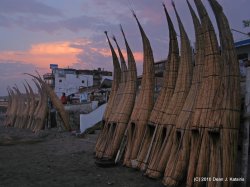
The next day was equally lazy; I sat on the beach and watched the surfers some more and the fishermen in the distance. The town is pretty much a fishing village with great surf and the fishermen paddle out in these bundles of sticks fashioned into the front half of a boat and fish beyond the surf break during the day. When they’ve caught enough, the paddle back a bit and catch a wave, surfing their catch all the way to shore. I sat in an overpriced restaurant on the shore and drank some great Peruvian beer and ate some fresh mixed ceviche. If you had to kill a day or two waiting for an overnight bus, I reflected, there are worse places to do so. Back at the hostel, I caught up on my Galapagos photos and blog (finally!) and then went out for dinner to the same place I’d had lunch the day prior. I was joined by a mixed group of cool people from all over the world not long after I sat down and I thought how cool it would’ve been to have a big group like that to hang out with again. The last time was in Nicaragua and that country is still a highlight on this trip. Still, a little alone time here and there is good and I suppose I’ll make a bigger effort when next I settle somewhere for more than a day or two. I caught a bus to Trujillo and made it with about 20 minutes to spare before my overnight bus departed. Then I was off, into the moonlight, watching The Big Lebowski (I finally realize how great this movie is!) and Transformers 2 (which, simply, is terrible) before falling asleep.
Any trip that starts off with me realizing that I don’t have my camera on me is bound to get mixed reviews. The question was, where was my camera? I had taken it off to put on my shirt at the hotel, but then maybe I took it off again at the ticket agent for the ferry when I transferred all the valuables I didn’t want to bring to the beach back into my day pack. One of the guys that worked at the ferry called the office for me and though it was hard to understand anything in the wind, it appeared they didn’t have it. Could be at the hotel then, or else somebody there made off with it. It figured I’d lose my camera in the safest place in South America. So all the photos you’ll see here are Bjorn’s (though I did take a few of them with his camera and in spite of the automatically pasted copyright watermark). We arrived two hours later though the time passed quickly in my Dramamine-induced sleep. I was not in a pleasant mood in spite of the fact that Miss Isabella was sitting across from me looking quite pretty. True to Freddy’s word, our guide for Isabella was there waiting and brought us (after a dog sniffed our bags) to our respective hotels. The place Freddy said we’d be staying, Sula Sula, was not where we wound up however. We wwere dropped off outside a really dodgy looking place called Flamenco Hostel with a black gravel yard and paint peeling from the buildings; thankfully inside was really nice and so we didn’t worry about it. The family that owns the hotel was also really friendly and lent me their phone to call Freddy, making me a glass of juice at the same time. Freddy promised to check if the hotel had my camera and called back two minutes later confirming that my camera was safe. Then I could smile again.
The guide was back 10 minutes later to take us to a lagoon of flamingos. I was expecting some detailed description of how the flamingos get their colour from eating shrimp or maybe something about how they act as part of the ecosystem, filtering microbes and such. Instead, we went to the lagoon and looked out at three flamingos (it is sometimes full of hundreds more, or so I’ve heard) with a short break for pictures before he took us to the beach for sunset and to talk a little about land iguanas and the volcanic history of the Galapagos which was a bit more like it. The sunset was really pretty, the iguanas were everywhere, and we went later to a platform and watched the crabs scurrying across the rocks. Dinner was at 7 with the rest of our group, which mostly consisted of a loud Italian guy who was friendly enough even if he did basically exclude us by speaking Italian to the rest of the table, some of whom were also Italian and others who could piece it together with their Spanish. There were three kiwis that we had flown in with who also left with us, a few people from Spain, and the Italian’s goth girlfriend from Poland. Over the next few days they would increasingly get on my nerves, insisting that someone ELSE take the single seat up in the truck so they could be together every minute (nevermind that they separated a different couple to do so), making us wait again and again, and so on. Ah well, that’s travel.
The next morning’s trip was a walk up to the top of a volcano whereupon we’d get on some horses and ride around the crater rim. The walk up was a walk that could have been anywhere aside from the fact that the odd vegetation mix marked it as the Galapagos. Our guide put his phone on speaker mode and played some music the whole way up and so I took a rather antisocial position in the midpoint of the gap between him and two other Ecuadorian guys and the loud Italian, trying my best for a quieter walk and to hear the birds and other animals. Maybe I was still grumpy about my camera. At the top, we got on our horses and rode in a mix of galloping, trotting, and walking, though they were quite lazy horses. The crater was huge and impressive and covered in black rock with a few channels carved out of it from the last eruption. It was cloudy and overcast but we could see down and when we walked a little further down to get a better view of the island we were lucky to find the cloud lifted enough to get a great view of the chain of volcanoes that made up Isabella island. From there, it was back on the horses which we rode most of the way down though it was muddy and treacherous at times. My foot fracture from that terrible volcano in Panama somehow made itself reknown and the walk down after the horse wasn’t pleasant at all. But we got down without mishap, loaded up, and headed for the next stop on our tour: snorkelling.
I was pretty excited for the snorkelling but didn’t have much luck when I got in the water. There were Galapagos penguins around but one never swam close enough for me to see it. That would’ve been pretty awesome but it was nonetheless cool to see penguins at all here on the equator. The visibility just wasn’t that great but I don’t want to seem too negative because I enjoyed it even if it didn’t live up to “the Galapagos” standard. We moved to a different site after that which was much cooler – an old lava chasm in the volcanic rock that you could swim along. There, I saw a puffer fish, came eye-to-eye with a huge crab when I surfaced, and had a great time over all. Back on the boat it was time to head for shore, another dinner with menestra (rice, beans), a visit with the kiwis over some beer, and finally an early sleep. The ferry back to Santa Cruz leaves at 6 AM – with a $5 departure tax, by the way – and that meant we needed to get some rest to be at the dock in time. The next few days (Saturday and Sunday) were for Santa Cruz and would hopefully involve me finding a company to SCUBA dive with before setting out Monday morning for our 8-day sail around the islands.
Our very last minute flight to the Galapagos didn’t take long at all to get there though it was delayed somewhat in departure. The South American coast slipped away and before we knew it several of the islands were materializing below. They are (rightfully) pretty strict about what gets on these islands and so we’d had our bags inspected and organically scanned and they sprayed the plane down with something that can’t be healthy before landing. We had already paid the park fee of $100 and the $10 visa pass to enter and on landing everything was rechecked. They’re also pretty picky about who is on the islands which makes it very unique once you get to the main town in Santa Cruz. It’s a cleaner and safer Ecuador. While we were waiting for our baggage at the airport, a chubby man named Freddy mentioned that he might have a boat for us on Monday which he could couple with a two-day trip to Isabella Island. So it didn’t take long before Bjorn and I were on the hunt for deals and comparison shopping. But that would all wait for our crossing some very strange landscapes with black volcanic rock, desert cacti, and plenty of green and verdant plant life all mixed together. The airport is on a small island all its own and so getting to the small town required a bus, ferry, and then a free ride from Freddy. Then, at last, we could truly claim to be here.
When we arrived in the town Puerto Ayora on Santa Cruz, I have to admit I was surprised. The town appeared to be much more developed than I was expecting. I will say now to other backpackers: if you’re thinking about coming here but worried about finding a boat, don’t be. Even if you don’t find a cruise, there are so many places to explore on your own, there are plenty of amenities, and aside from slightly pricier rooms (~$15/person) relative to the rest of Ecuador, food costs aren’t much more than, say, Montanita. We arrived in taxi courtesy of Freddy, and managed to get ourselves a room at the Castro (private bath, hot water, a/c) for $15/night partly because he was hoping to sell us a boat cruise. If we booked the cruise with him, the hotel was free on top of that, so staying was a no-brainer. We walked the town immediately looking for other cruises, deals, and spent the whole evening getting information, comparing, and bargaining until we made ourselves a deal that beat Freddy by $230 although she couldn’t confirm our spot so we agreed to make it official in the morning if nothing changed. Back at the hotel, we told Freddy the bad news – he said it was impossible for her to offer that price but if she had then we should take it and we thanked him and said goodbye. Thirty minutes later he was back knocking at our door saying he’d gotten off the phone and managed to get her price AND shave $20 more off of it – not to mention throwing in our first hotel night for free. So, he took us out to have a firsthand look at the boat, meet a few of the passengers who seemed happy if seasick with their choice, and we made a new deal.
The cost wasn’t cheap – nothing in the Galapagos is – but for 8 days on the Angelique, a Tourist-Superior sailboat with a/c and hot water with all food, activities, and snorkelling equipment included, a two night stay on Isla Isabella including a volcano climb with horseback riding, a visit to a flamingo pond, snorkelling, and return ferry, and our first night’s accommodations free cost us $1130 all in. Considering that most last minute passengers were paying $1200 for just the boat (and those that booked ahead were at nearly $2000 if propaganda is to be believed), we thought we did pretty well for an evening’s work. To celebrate, Bjorn and I had a drink and cheered, for the first time, to Cotopaxi AND The Galapagos. It was Wednesday night, April 7 and we had woke up that morning in Montanita with no idea we’d be in Galapagos and with a successfully negotiated cruise by that evening; that said the timing was a bit tricky. SCUBA trips leave at 7:30 AM and our boat left Monday morning from near the airport (Freddy was taking us out there). That gave me Thursday-Sunday to get in a dive, but we also had two nights/three days occupied with the trip to Isabella Island. And I couldn’t SCUBA Thursday as I had just flown and you need at least 24 hours, so that meant the next day we were headed out to Isabella at 2 PM.
That morning, however, was ours and we planned to go check out Tortuga Bay... that is, after paying Freddy a deposit. Nobody here seems to accept credit cards in spite of the large amounts of money changing hands and so most agencies are pretty happy to accept payments in doses. Most bank cards have daily limits, after all, not to mention some ATM machines. Freddy wanted the whole thing now but finally we convinced him to take as big a down payment as we could muster and quickly so that we could still get to Tortuga Bay. We didn’t have a lot of time but we did manage to make the 45 minute walk out and were not disappointed. Miles of white and pristine beach await with scarcely a soul to be found – in fact, wildlife outnumbered people by a fair margin which is just the way it should be here in the Galapagos. The surf was definitely up but you could walk a distance further to get to a tranquil spot where there were virtually no waves. Just iguanas, pelicans, and you. It was here that I saw just how magical this place was, that these creatures – some of which know planet earth only as a single island in this archipelago – had no fear and in fact even curiosity for humanity. We also ran into Dylan and Connor of Cotopaxi fame on the beach and chatted with them a bit about their stay in the Galapagos after which they treated us to some warm but tasty Scotch and we said our goodbyes. There would be several returns to Santa Cruz island, including our final stop from the boat on a distant Monday to return to South America, but we hurried back along the path just in time to catch our two-hour ferry ride to Isla Isabella.
Bjorn and I arrived in Riobamba mid-afternoon on Good Friday having narrowly escaped the throngs of people in Baños for Easter weekend. That said, I was a little concerned that I had missed out on a pretty unique cultural experience by leaving at the beginning of the festivities. Equador is, after all, one of the most religious countries in the world. Still, we found a really cheap hotel that the Lonely Planet describes as “in desperate need of a facelift” for $4 and found that, for a change, the authors were spot on. It could be a really cool character hostel, Ñuca Huasi, but it looks like the owners have decided to wait for it to be condemned instead. Still, you can’t complain for that price and the location was great or would have been, were anything open. We had learned before coming that the main tourist attraction, the train down the Devil’s Nose whose main feature is that you ride on the roof, was closed for maintenance until August (sorry, Grandpa), so our plan was to try to find a decently priced mountain bike excursion down the slopes of Chimborazo, the highest point from the centre of the Earth. After walking and walking in the rain, we could find nothing whatsoever open aside from internet cafes and a few pharmacies, so we amended the plan yet again to try to find someone to take us first thing in the morning Saturday. Then the hunt was on to find food... we grabbed some fruits at a local market for breakfast and I eventually spotted a few Chinese lanterns and we headed for those. Sure enough, it was open. The Chinese never rest.
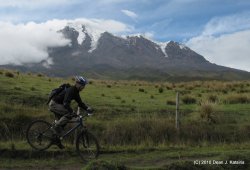
Back in our room later that evening, a low din eventually became full out singing just outside our window. An Easter procession was passing by on the street below. We grabbed our cameras and ran down, following the procession as it passed various platforms where people re-enacted scenes from the crucifixion. Life in the town was resurrected briefly before falling back abruptly to still silence. There was little to do but grab a box of wine and have a few drinks back in the room. The next morning, after a couple hard boiled eggs (it was Easter after all) we were up and at the office of a company called Probici right at 9 AM. It’s an interesting office, tucked into the second floor of a textile factory, but in this case appearances were deceiving and the owner, Galo, was a consummate professional and took great care of us. We managed to organize a trip for 11:00 up to the lower refuge of Chimbarazo (4800m) with a couple pretty nice “old” mountain bikes that were in prime condition, down its slopes and into an indigenous valley where Incans still tend their livestock, smoke out rabbits, and carry on their traditions. Galo would follow us and/or meet up with us at various waypoints and where it was impossible for him to watch from the support vehicle he would supply us with two-way radios so we’d always be able to reach him.
We grabbed a quick breakfast and sandwich, a few snacks, and ran smack into another parade that morning – this time for the rodeo. Horse upon horse and float upon float went by our hotel as we wondered how Galo was going to pick us up in the pandemonium. Then a woman with a two-way arrived and walked us to where Galo, his truck, and our bikes were stuck in traffic. The man had a plan for everything. As we drove towards where Chimbarazo was supposed to be – it was shrouded in cloud that morning – he narrated the history of the area in what would have been excruciating detail were it not for his obvious love of his home. Soon, we were at the park entrance where we managed to get student rates for entry and then we were in the clouds at the refuge. The mountain was very busy for the holidays in spite of the weather and we asked a few Ecuadorians if they had climbed up to the second refuge, giving me the opportunity to practice my past tense. They had and there was nothing more to see but cloud so we skipped that outing, hopped on our bikes and started down. I won’t narrate the entire ride but we started out on the dirt road down towards the park gate and when we arrived there we took off along a dirt trail crossing ravines and other obstacles. We were clad in helmets, gloves, knee pads and elbow pads and I felt pretty safe considering the debacle the last time I was on a bike in Ometepe.
One of the items on the waiver we signed is dog bites, for which Galo takes no responsibility. We laughed about this at first but soon we reached a place where a few indigenous families were burning grass in hopes of smoking out some rabbits for dinner. Their dogs came right up to me quite peacefully and stood at my side but when Bjorn came down the mountain they were chasing at his heels. There were several encounters like this including one in which our roles were reversed and it was only my extreme speed down some of the hills that kept the dogs from catching up with me. Or so I like to believe. The weather improved throughout the day and to our good fortune we soon had clear views of Chimbarazo looming behind and beside us. The sunlight did wonders for the countryside as well, lighting up the canyons and green hills and eventually distant peaks around Riobamba in the distance too. I have to admit that we have been really blessed with great weather from Cotopaxi onward. After our 38km ride back down to some small town with a funky modern church Galo picked us up and drove us back to Riobamba. We talked about where we were headed next and here’s an example of how above and beyond Galo went with us – he took us to the bus station and waited outside for us for a very long time while the ticket salesman served anyone but us until even the woman behind us was getting annoyed. Then, with our tickets in hand for Guyaquil the coming Easter Sunday, he drove us back to our hotel, thanked us profusely, and wished us a happy trip. I wish I could send business his way but the fact is with Riobamba’s train out of commission until August, the town is just not on the tourist trail. Still, anyone going through there, I would HIGHLY recommend taking a day for a really fun and beautiful bike ride with Probici.
There wasn’t much left to do in Riobamba. We were back at our hotel for 6:00, making our outing a 7 hour one, and we grabbed dinner, walked around a bit, and called it a night ... after I finished my box of wine, that is. A $1 taxi to the bus terminal later, we were on our bus for Guyaquil. But it being Sunday – and Easter Sunday at that – we realized en route that there was not going to be much chance of booking anything for the Galapagos that day or for Monday and then we came up with a pretty inspired plan B. After our 5 hour bus to Guyaquil, we grabbed lunch and got on another bus for a small coastal town called Montañita. We arrived there three hours later, marking the first time I’ve been on the coast since arriving in South America. The town is great if a little pricey by Ecuadorian standards, full of life and with a nice strand of beach and a pretty steady amount of surf. In the days, restaurants and beach cafes are the main pastimes where in the evening, a whole street full of little bar stalls called cocktail alley comes alive with music, mojitos, and mixed drinks.
Had I not already spent more than twice the expected amount of time in Ecuador – and that’s not including Galapagos – Montanita is the sort of town I could hang out for some time. Cocktail alley and beach parties by night, surf, sun, and sandals by day. All I’d need was a good book and a hammock. The hostel we stayed at had the hammock, but the book was somewhat lacking. I won’t say it was a bad book, but The Other Hand definitely required turning the other cheek for the first several pages. Seriously, it takes about that long for the narrator to finish talking about what magic “a pound coin” can do in flowery, exaggerated prose. Yet with all that, she never mentions the one thing I’d just discovered it could do: induce nausea. Still, braving through that it turned out to be a believable and even difficult to put down tale of a refugee and an English woman’s twisted destinies. So that took some time, hanging out with some people from Botswana took some more, and the beach and sun ate the rest leaving me red when we left three days later. The plan now was to head to Guyaquil and try to suss out some Galapagos deals but when we arrived at 1:30 and swung by the airport we quickly discovered ourselves fast tracked for a 3:00 PM flight. Galapagos, here we come!
North we trundled in the minibus. Our destination? The town of Santa Marta. Or was it a city? It occurred to me, sitting on that bus, that I didn’t have a clue what we were heading there to see; I only knew that nearby Tayrona National Park was meant to be beautiful. Given that we were halfway there, it struck me as about the time where I should be able to answer why and I dug out my big red Lonely Planet. The summary was less than exciting: A city with fading charm as colonial buildings crumble and are replaced by modern concrete ones, mostly used as a stopping point for people doing the five day trek to the ruins of the lost city. Why we were going here on our short time budget was a question that neither Phil nor I could answer and we both laughed at how ridiculous our current scenario was and waited to see for ourselves. Luckily, when we arrived we found it quite a lovely place. We’d booked ahead for the Aluna hostel, new and really nice. They had what is, without a doubt, the most impressive collection of a book exchange I have ever encountered as Patrick, the owner, is very selective on what gets traded. The dorms were clean, spacious, with great mattresses, fast and secure wifi, and beautiful rooftop common areas. Sometimes it’s best to not rely on guidebooks, and this seemed a good case for that argument.
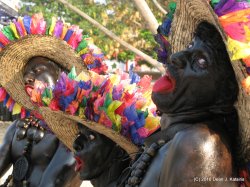
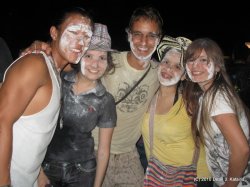
In our room was a hilarious Norwegian guy named Chris but otherwise not much of a social scene to speak of. Then again, it was Carnaval and although the big party is in nearby Baranquilla, there is still plenty of action in the streets here and quite a few were gone there, we suspected. Phil and I went for a walk through town and stumbled on the Carnaval area replete with people whose faces were powdered in white, clown wigs, big hats, and black body paint. Street vendors were everywhere selling snacks and drinks and inside a fenced wall there seemed to be a beer garden of sorts, though more likely it was a place to watch live music later in the evening. Beer gardens themselves have no place in a country which allows you to have beer in the streets. As my camera was already in hand, I managed to catch a couple little boys spray down Phil’s entire left side with spray foam (espuma). I chuckled at it and we were joking about his new skin complexion when the kids decided I was next. They covered me and my camera in white foam but I got what is now one of my favourite photos as they did so, not to mention a pretty funny one through my soapy lens. The camera, with a few minutes of love, was fine after its first Carnaval encounter.
But we were hungry and street food was not going to cut it today so we ducked out of the area and walked to the oceanfront where we were surprised by the number of people out on the beach at dusk and milling around. Santa Marta doesn’t have a great beach (it’s more well known for nice beaches it’s close to) but it was definitely adequate and had a nice island backdrop not to mention a very parky avenue running along the coast. In fact, this city has an abundance of nice, wide, green avenues and we walked along a couple before we finally settled... for street food. Otherwise, prices were a bit too steep, but the salchipapa we had (cut up hot dog, fries, grated cheese, and cabbage) was actually pretty decent. We were planning on heading to Baranquilla for the carnaval so we didn’t end up returning here that night but went back to the hostel, met up with Chris, and had a couple beers on the rooftop terrace before calling it an evening. The plan for the next day was to take a day trip to Tayrona and see what it was all about, but by the time we woke up and talked with an Aussie guy, that plan had been nixed. It was an hour drive to get there and a two hour walk with your stuff to the nice beaches not to mention a pretty hefty 35000 entrance fee and in the end, the math didn’t make sense to do a day trip much less a half day trip. We needed a plan B.
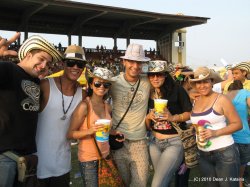
We could hang out in town. We could go to nearby Taganga, a fishing village just outside the park with a decent beach for the day instead. We could go to Baranquilla today and come back to do Tayrona tomorrow. In the end the option we went with was to leave a day early, stop in Baranquilla for a few hours, and then catch the last bus home to Cartagena that evening. So we packed up and trucked out, two hours later arriving back in Baranquilla with no idea where to go. Still, we stashed our bags at a restaurant in the bus station. Hopefully they would be there when we got back – I took my passport and camera with me but otherwise most of my stuff was in there. Finally, we convinced a cab to take us there for 15000 and while we wondered at times if he was taking us all the way to the Carnaval in Brazil, he got us to the place eventually and we were free. I’m not sure if there’s a lent-Carnaval connection, but what it is, basically, is a four day party-holiday for most from Friday to Tuesday with Latin music and dancing and crazy outfits, paints, and so on. As we were walking around the stadium which was filled with roaring people, we saw a big mural for Daddy Yankee and got excited when not one but two scalpers told us that he was playing tonight. Phil and I looked at each other.
The tickets had a face value of 24000 and we paid 30000 for them which also included (through muscle and force of will) the ability to cut through the massive line that was spiralling around the stadium and walk right in. Well worth the extra $3. And we didn’t know it then, but that night would be the best night out we’ve had since, well, I’d probably have to go back to Vang Vieng in Asia or something to top it. We had no hotel, and all our stuff was at the bus station, so why not? The party was over at about 5 AM and we could go to the bus station and just catch the first bus heading back to Cartagena. In we went, a quick search later, coming out of the entrance below the stands to live reggaeton music and the sounds of thousands of Colombians dancing, drinking, and throwing flour and water at each other. Phil and I were smiling ear to ear at this unplanned modification of our heretofore rather ill-planned trip north and without even trying a really friendly Colombian started introducing us to all his beautiful female friends. Now THAT’S hospitality!
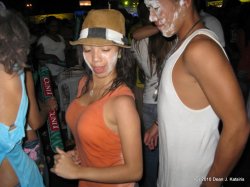
Before we got into any more drinking however, we had to get some food in our systems. That was solved by the numerous meat-on-stick with potatoes venders spread around the stadium. Then, large plastic beer cup in hand, we rejoined our new friends and for us, the party began. They were a cool group and Maria Jose (who asked that we call her Majo which is an entertaining nickname) in particular took to introducing us to her many friends that were also there. How we got so lucky as to be included in this group of Colombians is beyond me but I am extremely grateful. Nearby, there was an older guy, probably in his late 40s anyway, who was delighting in childlike mischief. He’d buy water after water or talk the guys with coolers into dumping some into his cup and then start splashing random people. He soon turned his attentions on our group which instigated a full out water war that would flare up time and again throughout the night. I’m not sure if they sold packets or people brought them from home, but the next innovation in Carnaval weaponry was flour all over your face and clothes and hat, and throughout the night I sported white beards and skin grafts of varying size, shape, and density. All of this was a lot of fun.
Of course, the main event at least that day, was the music. They had band after band of live Colombian music and meanwhile the girls would patiently attempt to teach us steps which passed the time really quickly. In retrospect, a bit more drink would have been good as I might have loosened up a bit more on the dancing, but budgeting intoxication for a 12 hour shift with no sleep is difficult at best and all the more so while already intoxicated. I feel like the fact that I did not collapse in a heap on the grass is testament to my skill in this department, but I probably have to give the group credit for keeping us so entertained. We didn’t end up getting to see Daddy Yankee live, which would have been awesome, but we did see a live performance of “Yo No Se Manana” which I was quite excited about and – and this is important – AND we found a new musical obsession to knock “Llamado de Emergencia” to second place in the charts after a very long run. The song? “El Celular” by some Cartagena group, performed live and catchy as swine flu at preschool. This song became a theme throughout the night and by morning we were hooked.
Eventually, it got to be about 2 AM and Grace invited us all back to her house for a house party. First, of course, we stopped at a little restaurant and grabbed a really good mid-party roast chicken meal and then to get some vodka, red bull, and Canada Dry. I’m not sure that gingerale is especially Canadian, but it makes me feel patriotic nonetheless. Then off to Grace’s house which was actually really nice. We had lost the guys who first introduced us which is too bad because we owed him a bottle of vodka all to himself – what a great group of people. I’d had dance lessons galore from Majo and Daniella, and we met a Swedish Colombian girl (!) named Elsa there who took my education into her own hands (or should I say onto her own feet) at the party. The vodka didn’t last long and the red bull was half gone before we’d even arrived but it was enough. Our new song came on several times throughout the evening and we got excited everytime. We partied until 6 AM and then said our goodbyes and headed to the street to find a taxi to the bus station. There weren’t many, and when you look foreign they try to get a good price out of you, but almost four months of travel hadn’t exactly left us new to the game. We negotiated pretty hard with one guy (we already knew what the fare should be) and he drove off but eventually turned around and told us to get in. “How much?” I asked. It’s always important to be clear. He tried one last time to repeat the number we’d already refused and I shut the door again and said no then he caved and said, “OK, 15.”
Watching different people haggle is interesting as everybody has their own approach and I think it largely depends where they’ve learned or if they’ve learned. Some don’t haggle at all, justifying the cost as meaningless to them in their currency but very meaningful to the locals. This doesn’t work if you want your trip to last more than a few days. Others think drawing a hard line is rude and I’ve seen people react negatively to it, but at the end of the day, they won’t sell you something if they’re not making money or it’s not worth it for them. They’re just trying to get the most they can for what they’re selling (in this case, a ride) and on our side, we’re just trying to get the best price for what we’re buying. It’s a bit unfair on our side, if anything, because we often don’t really know what we’re bargaining for. Exactly how far IS the bus station, for example? But for those worried that we’re rude about it, no, not at all. We have our price and a respect for the other person so long as they’re not asking initially exorbitant amounts and though you play the game afterwards all is well. Our driver seemed dejected and like he was making a big sacrifice, but once we agreed he was all smiles. It’s not every weekday morning you get a big cross-city fare I’d guess. We ripped across the city at breakneck speeds, sometimes almost triple the posted limit and when he found out we liked “El Celular” he found a CD with it, cranked the volume, and played it on repeat all the way to the bus station. A great cap to the night.
But it still wasn’t over. We still had to get back to Cartagena, though getting a bus ticket and getting on the bus was not much work at all. Both Phil and I slept pretty much the whole way back to Cartagena and then from there we taxied to the old town again and stayed at Casa Viena. Phil was asleep the moment we sat there waiting for them to clean the room but I couldn’t get back to sleep. I read, I laid down, but I wasn’t tired... just exhausted. So I went around the town on a bit of a walk, grabbed some lunch, and then came back and finally had a two hour nap from 3-5 PM. Phil and I got up and did a bit more walking around the town. Cartagena deserved more time, more photos, and is somewhere I’d really like to return to in the future but fatigue still had me in its grip and after a seat in our usual square and finding Hotel Santa Clara at Maria from Bogota’s suggestion (they wouldn’t let us in!) we went back to the hostel and slept right through until morning. We were going to catch the bus to Medellin at 7:45 AM but nobody would give us the fare we’d researched, which was 70000 pesos ($35). They wanted $55 or 110,000 when we could fly for 81 plus taxes and get there in 4 hours instead of 14. So we got on the internet, booked a flight for noon, and headed to the airport. We had to repack Phil’s whole backpack into mine and his surf bag to save him money on extra luggage but it worked and we were soon in the air and flying south to Medellin.
We were in the small village of Capurgana in the Darien gap of Columbia, one of the most uninhabited regions on the planet because here, the wildlife is truly wild. A Norwegian guy would later tell us a story about a journalist in Darien who had fallen asleep with his tent not fully zipped and woke up to find blood everywhere and half his scalp chomped off. A vampire bat – with rabies, it turned out – had managed to get in and feasted all night. He managed not to die, somehow. We however, we in a village and while there were no cars, roads, or electricity after 8:00, it was not so remote as that. The only way in or out was by boat and it turned out that the one boat heading to Turbo, a small city two hours away with roads and a bus terminal, was sold out for the day. There were, however, three spots on an indirect route to Candi and from there onward to Turbo. I looked at Amy, one of the three English people from the boat, and said that since Phil and I were two and Renee and Jared were two, it made sense for them to take the spots and we would spend another day in the middle of nowhere. “But I feel so bad, you guys are stuck here,” she replied. “If there were four spots, it would make more sense for us to use all of them instead of you guys but there are only three so this is the most logical thing,” I replied and she agreed with me. That is, until 30 seconds later the ticket agent turned and said he actually had 4 spots.
Suddenly, it still made more sense for the three of them to take the tickets. Simon, after all, was only traveling for two weeks. Well, Phil only had two weeks left too, I thought, but I said, “I wish everbody were here to discuss it” because I did still feel a bit bad to take the spots and strand them. She went to tell them while I stalled for time to try to hold the four spots and came back saying everyone had agreed that the three of them should go. Fair enough, consensus wins, and one more day in this small town wasn’t so bad. Still, not once did any of them say thank you and I further discovered from Phil that the story they’d heard was that there were four tickets to Candi where they’d probably have to spend the night and not all the way to Turbo via Candi. Anyway, I wasn’t happy with them on principle though the town was lovely. It also allowed Phil and I a chance to retrieve our hats which had been left aboard Da Capo. We walked around, lunched, finished our vodka with Jared and Renee, and went to sleep. I had a weird night where I awoke certain I had drunkenly got myself on some ship. We were in a hotel right over the water and the window was open, so there was the noise and breeze from the sea plus my head was still wavy from 5 days on a boat. I had philosophical thoughts for a few hours, saw shapes in the shadows, grew paranoid that our open window was an invitation to thieves, and finally fell asleep where I had a dream I could fly. I guess being back on land was taking some adjustment.
The next morning we got on our boat to Turbo where they fleeced us for baggage weighing over 10kg. In other words, any backpackers not making day trips would pay a lot more. Two hours of bumping and motoring along the ocean and we made it to Turbo where we hunted down a bus to Cartagena. However, there is no bus to Cartagena, only collectives (minivans) to Monterria and we got into a bidding war which ended with in a converted truck for 20000 pesos ($10). The driver was an idiot however and managed to clip an oncoming truck... with Phil’s surfboard. This didn’t seem to concern him at all which was obviously upsetting but he eventually had karma catch up with a flat tire. Of course, we had to sit there and wait at the side of the road, so I’m not sure that’s really a fair trade. We made it to Monterria finally and from there got in another colectivo (with a different company) to Cartagena for another 4 hours. Here, I made some friends in the van and wound up chatting with a few of them while they would talk to me and take turns answering my questions. Two of them gave us phone numbers to call, the first (Osbaldo) for somewhere Phil could get his surfboard fixed and he’d pick us up and bring us there, and the second (Carlos) to go out with him and his friends.
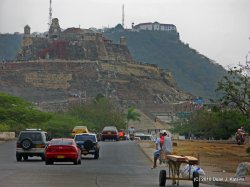
We got into Cartagena 13 hours after we first got on the speedboat that morning and Osbaldo offered to split a cab with us then negotiated a fair price out of the locals. He made sure the taxi knew where we were going and we were finally in Getsemani, the backpacker district at Hotel Holiday. We went out and explored the town and basically decided we loved it almost immediately. The buildings were colonial and thanks to the city’s walls and well-positioned defences it had never been sacked by pirates and privateers. People were everywhere, plazas with old buildings filled with chairs and people drinking in the moonlight with floodlit churches and historic sights all around them. Houses and little bars were pumping out salsa music and families and friends were there loving life and partying like there was no tomorrow. Phil and I sat in the square and people watched for some time, too tired to do much else but enjoying the atmosphere too much to sleep.
The next day in Cartagena we just walked around. Freshly squeezed orange juice and a fried mashed potato, egg, and ground beef ball for breakfast, we walked around the old town where we were staying looking at hostels and buildings. From there up to the centre looking for surfing shops for Phil and of course enjoying the town on a Saturday afternoon. We walked all the way up to the beaches and downtown area before grabbing a taxi back to the hostel. Daylight had only made us appreciate this place more, not to mention that it is literally crawling with beautiful girls. People watching has never been so much fun. We’d seen some cheap places in the old centre to grab a bite and wandered back there. While looking around, we ran across Renee and Jared and very shortly after, Hanna and Simon. We all had a beer together at a place we thought served dinner but nope, only lunch, and then split off because Renee and Jared are picky eaters and didn’t care for the cheap place that Phil and I found. We’d planned to meet them but the place they were going to go was closed when we got there and there was no sign of them at their hostel.
We walked back to the centre thinking they’d maybe taken a seat in the square but they weren’t there either so we decided to check out the nightclub all the street guys were trying to get us to visit: Isis. We arrived with beer still in our hands so we sat outside watching. It didn’t take much watching to realize the place was crawling with prostitutes. It was basically a brothel under the guise of a nightclub but we went in anyway to see what it was like. Everywhere, and I mean everywhere, we saw them and a few American-looking guys and not much of anybody else. We thought it’d be entertaining to have a drink – beer, to make sure if wasn’t spiked – but they told us it was 12000 for a beer that is usually 1500 and we saw why. If you are there, it’s for one thing only. We left. From there, we walked back to Getsemani and Avenida Nacional which is along the city walls, water, and filled with clubs. We went to a few but discovered that everybody was there with somebody. Outside one, a blonde came up and asked where we were from. “Canada” we answered. “WHERE?!” “Saskatoon”. At this she gave us a thumbs down and stuck her tongue out, and her lame attempts to excuse herself later were unheard. Traveller or not, that’s my home! And you’ve probably never been there.
Inside the club, she was nowhere to be found thankfully. The plaace was a visual overload, the girls here and the way they dance was eyeball popping. Of course, everybody is with somebody else, and we didn’t find any groups that looked inviting. Phil tried, against his better judgement, to chat with some Argentinians we’d seen in Bocas del Toro, but as usual they were snobbish and couldn’t wait to be rid of him so that they could be ignored by everyone else. There have been exceptions, of course, a few really cool Argentinians we’ve met along the way, but for the most part this is standard. One of the friendly ones told us that most of them who travel are the rich and think they’re better than everyone. Someone else postulated it was their largely Italian descent that led to their arrogance. It’s been said that once you are let in to the group they are very warm and friendly but otherwise nearly impossible to even be friendly with. Unless they want something from you. I stupidly gave away my bandana in Bocas del Toro (after initially laughing and refusing) to some Argentine girl that came up to me on the streets. Phil had lost his treasured SURFO hat. If you’re thinking it’s ironic or hypocritical to be offended that someone tells me my town is a dump and then have a paragraph about the attitude of Argentinians, you’re probably partly right. But I’m not dissing a place I’ve never seen or even talking about the country as a whole. I’m only recounting that most of my encounters with Argentinians thus far have been negative.
We had ourselves a dilemma the next morning. It was now the 14th, Valentine’s Day, and if we wanted to meet up with Anabella and Maria, we had to be in Bogota by the 20th. And there was still Santa Marta, carnival in Barrenquilla, the Tayronga National Park, the lost city, Medellin, the slow boat trip south to Bucaranga (two days) and busses. We decided that morning to head north to Santa Marta, spend a day there, a day trip to Tayrona, come back to Barenquilla to see carnival, and then back to Cartagena for one more day before heading south. I would have to miss Medellin (at least for now) to do my boat trip and I’d also have to skip San Gil and some hiking near there. Colombia would probably need a return visit even if I did double back to Medellin. The north was getting the short end of the stick but on the other hand it would help accelerate my timeline a bit and ensure that, despite the temptation, I didn’t spend too much time in Colombia. So we got on a collective and headed north to Santa Marta, four hours away to squeeze in what we could of this part of Colombia.
A favourite speech from Seinfeld begins with George Costanza setting the scene: “The sea was angry that day, my friends, like an old man sending back soup at a deli.” Indeed, many of the crew would, that day, refund their soup and also cheetos. The wind was coming from behind us as our sailboat, which suddenly felt too small to make this passage, bobbed, weaved, dropped, and heaved in the swell. Contrary to what you might expect, a tailwind is probably one of the worst winds you can have sailing. Why? Well, I’m going to get geeky on you here but it’s because a sail actually works a lot like an airplane’s wing: that is, the wind doesn’t actually fill the sail and blow it forward. Instead, it runs along the curvature of both sides of the sail. Because the same volume of air blows across both sides, the air on the outside of the curve of the sail is actually more spread out than on the inside of the sail and that means there’s higher pressure inside the sail than out. What THAT means in turn is that the sailboat is actually sucked forward more than it is blown much like a plane is sucked upwards into the sky. This phenomenon means that wind blowing about 70 degrees from the front actually gives you the best speed and most stable configuration. What we had was a sail filling and pushing the boat along and then going slack as the boat reached the wind’s speed then jerking taut again as the boat slowed. In addition to the boat not being pulled in one direction and therefore rolling back and forth. (NOTE: This continues part 1, Sailing San Blas, below)
Still, I didn’t get sick. Others did, definitely, but that Dramamine was looking like the best $5 I ever spent. There was nothing to do except sit on the side and stare out at the waves and distant islands we were sailing past or standing beside the mast and looking off the bow as though it were your boat. Thus, it was the most relaxed I’ve been on this entire trip, with no pressure to be moving on to the next place (after all, we were!), study Spanish, write my blog, edit photos, or even read my next book which is Oryx and Crake by Margaret Atwood a very thoughtful bon voyage gift from Barb. I just sat and watched and contemplated and occasionally listened to music. I could get used to sailing, I think, although by the last day I was getting comfortable enough to not only start studying my Spanish some more but also working on photos belowdecks as we plugged along. At least for a little while.
Kuna, Ya!
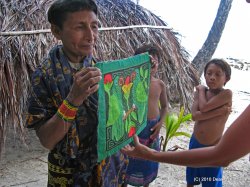
We arrived in the Kuna town of San Ignacio de Tupile a bit after 5 PM and immediately headed for land where we noticed for the first time that land felt funny as opposed to comfortable. Some of us even walked a bit off-kilter though I wasn’t really at that point yet, or at least no more so than usual given my tiptoe tendencies. And anyway we were soon too wrapped up in Kuna attention to notice. What a friendly and warm people! After reading about how isolationist and ‘tolerant but unwelcoming’ the Kuna are meant to be according to the idiot that writes the Panama section of the Lonely Planet (easily the most unresearched and throwaway section of the Central American LP) we found them excited to see us and eager to converse with us. In the main square kids would either run up to us and ask us to take their photo or approach shyly or just pose and hope we’d notice. The older kids would be brimming with questions and for us guys the eligible females were definitely curious if we had ‘esposas’. None of this was money related – we were twice approached by people looking to collect a $1 visitor tax but the others never asked for anything aside from our attention.
While we were standing in the square distant explosions, pops, and bangs approached with shouting. Suddenly, the square was awash with Kuna in red with wooden weapon facsimilies like rifles and swords running around and shooting at each other and us. They were rehearsing for their Independence Day celebration and as quickly as all the play fighting had started it moved further along the village. We left the village at sundown for the boat and after another great dinner and a bit of chit chat we went to sleep. Alcohol in any quantities was basically no longer an option after the day’s sail so we had our beer and realized we had purchased far too much alcohol for the voyage. There was no swimming here (especially after seeing the pit toilets over the ocean, Slumdog style) or beautiful island but the village was a unique experience all its own and we felt lucky to have seen it.
Day of the Dolphins
We had another big day of sailing the next morning but everybody had found their sea legs by then and nobody was sick at all. We broke up the trip by stopping for lunch outside a small group of islands and yet more Kuna villages. The afternoon sail was unbelievable: not only were we all in good spirits as the bouncing of the boat no longer phased us, but we saw no less than five separate pods of dolphins including one pod that was very curious and friendly and loved the sound of us cheering and clapping. They’d flip and jump and splash and race alongside the boat and probably hung around for half an hour. By the fifth pod, half the people couldn’t be bothered to look up from their books but I think we all knew it was pretty amazing. My perception of the ocean changed a bit that day. It’s kind of like wandering through the jungle. At first all you see is trees but with enough time you see there is plenty of life hiding among them and sometimes not hiding at all. Dolphins have that peculiar distinction of not having been hunted by man and are one of the few animals out there with whom, despite reckless tuna fishermen the world over, we still have good relations. This, to me, is what being in the Galapagos will be like and I’m very excited to make it there if I can.
Night of the Storm
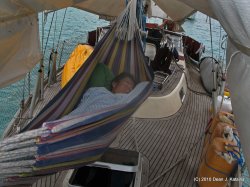
We anchored that night at Isla Pino which was again beautiful and also the last of the San Blas islands we would visit. There was a really strong current but some braved it anyway and while they were ashore we realized that our anchor hadn’t stuck and we’d drifted pretty far. Luckily we didn’t run aground or get hung up on some reef and we motored back up and anchored again as they swam doggedly back to the ship. We all sat on deck and watched the last sunset we would see over Central America which not coincidentally was beautiful. That night the wind really picked up and the boat was rocking something fierce but again, we’d all adjusted to the sea by then and only Phil in his hammock, swinging in the wind, had any problem sleeping. The captain asked us to wake him up if his computer started beeping, as it would mean we’d drifted more than 100m from our anchor point but thankfully there was no such emergency. We awoke in the morning afloat, intact, and anxious to complete our journey and see the coast of South America appearing on the horizon.
Yes, our last day had arrived and the agenda was nothing but sailing and fried bananas wrapped, interestingly enough, in bacon. I have grown to dislike two foods in my time here: beans and fried bananas. I started liking them, moved to loving them, but have since consumed more of both then any ordinary non-Latin human could be expected to endure and now can hardly stand the taste of either. Not green beans, mind you, just the refried variety that are part of every economical meal from here to Tillajuana. We sailed and sailed and yet more dolphin encounters to the point that I surreptitiously kept an eye on our captain to see if he was chumming the waters but I found no evidence in the end. Our last dolphin encounter came as the green hills of Colombia were growing large on the horizon, our first sight of South America and our last sight from the bow of Da Capo. We anchored at Sapzurro, right on the Colombian border and in the heart of the Darien Gap with no roads or cars, just boats to bring supplies and people in and out. From there, back on to a lancha with all our worldly possessions and we said our goodbyes to Mats, Dina, and Mateo then motored off in the distance to the next coastal town of Capurgana. We arrived just in time to visit the immigration office and get our passports stamped. “Welcome,” the officer said to me, “to South America.”
Let me just start this segment of my journey by reminding readers who may have forgotten amidst all my adventures abroad that I am a prairie boy. I come from Saskatoon, Saskatchewan, a beautiful city in the middle of a vast flat ocean... of land. The nearest coast in terms of driving hours is Vancouver, BC, about 20 hours west and over the Rocky Mountain range. This leg of my journey starts in Panama City and ends in a small town in Colombia, the two points on the map joined by five days in a 36’ sailboat called Da Capo with stopping points all along the San Blas Archipelago of islands. It would be unlike anything I had ever done before, bobbing along on the ocean with nothing but the wind moving us along, and arriving in a brand new continent. Sure, there are more risky ways to get to Colombia, which I elucidated on in my last post, but be assured dear reader, that this would be an experience and adventure that I would never forget.
The Caribbean in a 4x4
Panama City. Friday, Feb 5, 23:00. Phil and I have just returned from the grocer with what we think will be enough drink for the trip. 1L of Abuelo Panamanian rum, 1.75 L of Smirnoff Vodka, 4 L of Coke, 2 L of Fresca, and 12 Panama beers. While there, we ran into three of our fellow trip-goers, all English. There’s Amy, fluent Spanish speaker and PR consultant. Simon, funny if half-jetlagged Londoner who also happens to be an electrical engineer and project manager. If you’ve ridden the Tube, you’ve seen his work. And finally there’s Hanna, bubbly interior designer with some amazing ideas for her own coffee shop when she gets home. They too are procuring booze and we compare levels to find our estimates in agreement. They look like they’ll be fun and good company, which makes the voyage all the more exciting. Back to the hostel loaded with liquid we go for some attempted sleep though I found myself waking every hour. Finally, at 4:20 AM I woke up just before my watch alarm and got Phil up as well. The bus was supposed to arrive between 4:30 and 5:00 AM, and at 4:21, it was at the door and waiting for us.
We got on the bus and did not see our three English friends from the night prior, worrying now that we perhaps were on the wrong bus (though the driver did answer to Manuel which was the name we were looking for. Soon, I realized it was not 4:30 but 5:30 – my alarm hadn’t gone off because my watch has a ‘home’ time and ‘current’ time and you can set the alarm for either zone. I’d set it for home which was an hour behind. So now we were on this bus an hour later than expected, too. It wasn’t too worrying as we were still heading to the same place, but what about the English? What about the time? Had the boat left already? Only one way to find out. About halfway through the trip we discovered that the Canadian couple sitting behind us was also bound for our boat, so worries were allayed and we switched into a 4WD for the next leg of the journey, the only way at the moment to reach Carti. It was a sizeable trip for $25 and we arrived at Carti without any hassle or notes of interest. From there, another $5 for a motorboat to our sloop (plus $6 to pay to the Kuna Indians who basically own the islands) and soon we pulled alongside Da Capo.
Home on the High Seas
The Canadian couple, by the way, are from Vancouvr. Jared is an alectrician there though with his accent I am able to correctly deduce he’s originally from Toronto. The four of us are greeted on the deck by Captain Mats. The boat from above looks tiny but we are excited to be here nonetheless, our home on the high seas and gateway to Colombia. The captain brings us down below where we are amazed to see how much they have squeezed into so small a place. The only thing comparable I have seen are motorhomes and this definitely blew them away. There are the captain’s quarters where he, his Colombian wife Dina, and their son Mateo sleep and we store our large packs at the aft of the boat as well as another room at the front for Hanna and Simon. I sleep on the bench around the kitchen table and Amy sleeps across on the other bench – we just move a few cushions and there’s plenty of space, not to mention that our beds are backed by small storage cubbies and on top of yet more storage. The kitchen has two burners and an oven which detach completely from the counter at the pull of a lever to rest on a pivot through its centre of gravity. That way, when the boat is swaying or listing in the wind, the stove and its contents are always upright.
There is also a marine toilet with a series of valves to adjust for pumping waste out and sucking seawater in and the sink doubles as a faucet for the fresh water shower. Our boat has a fresh water maker which we’ve been told most others do not, but where it’s hidden I have no idea. Up the stairs there are two benches around the wheelhouse where Jared and Renee sleep at night which also has a foldout table not to mention gauges for depth, wind direction and speed, boat speed, heading, and so on. Along both sides run two narrow wooden walkways lined with mesh and cable to keep from falling off and at the bow of the boat is a flat area for sitting, visiting, and getting some sun by day. By night, this is Phil’s home, where he hangs his hammock and puts up the small shelter to keep him dry and a bit warmer. And that concludes my grand tour. The captain went through all this with us as well as the rules of the water and then went through our plotted course to get a feel for what to expect on the trip. Then, soon enough, we were underway – but the wind wasn’t strong enough to get us there quickly so we motored. The main sail was still up for stability but it wasn’t moving us at all.
Glowing Waters of Porvenir
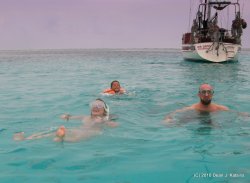
Our first port of call was the island of Porvenir. However, there was no port and nought but a dozen Kuna upon whom to call. In other words, aside from this family, the island was empty, beautiful, and all ours. The waters around the island were that turquoise blue you only find in Photoshopped brochures for Caribbean resort, practically glowing with electric iridescence from an LCD panel that wasn’t there. I waited with Phil, Jared, Renee and a few others for the captain to ferry us to land in the dingy while others couldn’t wait. Beginning with little Mateo, age 3 and a half, who donned his lifejacket grabbed a snorkel and climbed down the latter to snorkel on his own and followed by Simon and Amy they seemingly floated about 4m above the sea floor, so clear was the water. We made landfall and strolled casually around the island, the trip taking about 20 minutes in powdery white sand lined with palms. If I am being too verbose in my descriptions, understand that in doing so I am doing a great injustice to a chain of islands that require a poet’s brush of pen and much more space than I have here. Truly, San Blas was the pearl of the Caribbean and we were increasingly speechless as each incredible island was impossibly matched or bested by the next.
What we found here that we didn’t find anywhere else was ice cold beer and hammocks to accompany them. The island had the highest population of Kuna Indians of all the ones we would visit except of course for San Ignacio, which was a full Kuna town, but I’m getting ahead of myself. The Kuna are indigenous to these islands and have lived here far longer than European colonization. Whatsmore, they were quite possibly the only indigenous group to successfully ward off European interests and maintain their culture and lifestyle with little outside influence. They are a matriarchal society and when our captain asked why in a matriarchy most of the chiefs are male, it was explained that women were too hard and lacked the compassion and empathy needed to settle disputes and render judgement on what little crime and mischief may crop up. In general, it’s role reversal although men still filled the warrior roles which I found interesting considering this description. We visited with some on the island and looked at their art which is largely made of reverse stitching layers of material so that no stitches are actually visible or as near to it as possible. The Kuna seemed friendly and welcoming here even though our one sailboat alone nearly doubled their island’s population but we would have more encounters a few days later more worthy of description.
Dina’s Diner
We had read that our boat had a great reputation for food served but as most things down here, I’d believe it when I saw it. So, as the sun was setting and we returned to our boat, I was instantly curious at the aroma that wafted from the galley below. There Dina was grilling up some delicious smelling pork chops that lived up to everything we’d heard. After dinner and dishes, we all sat around the wheelhouse looking up at the many stars and Orion straight above with beer, rum, and a good dose of conversation. The night didn’t get too late, though, as we’d been awake since 4 AM and all needed some sleep, even Simon who’d pretty much slept all day. Breakfasts on the boat were a different matter. The supplies were eggs, bread, cheese, and ham. Do with this what you will. To be fair, the first day was Kuna bread warm in the oven and delicious, kind of halfway between a fried tortilla and dough but otherwise you were on your own. In fact that first day all I had were two pieces of Kuna bread with ham and cheese rolled in them. The second day the English went to scrambled eggs and I actually made a pretty tasty omelette if I do say so myself.
Chi Chi and Me
We had sailed after our visit of Porvenir the first day to the island of Chichime but arrived too late to do anything but enjoy the sunset. After breakfast we went up to the oat deck and were in awe of the place. The water here was literally swimming pool blue. On this blue water a Kuna paddled up with ten or so lobster on one side of the boat and a huge red fish on the other. To our delight, Dina started negotiating a price with him and bought eight pounds of lobster for about $5/pound for dinner that night. We transferred them happily to our boat, swam around and then came back to the boat for lunch before taking the dingy out to the shores of Chichime. We took some group photos in the water and again walked around the island. Here, there was only one family of Kuna and then us and it did somehow upstage Porvenir. The weather so far and in fact for most of the trip was cloudy but this did not diminish our enjoyment or the beauty of the San Blas Islands. Occasionally, we’d get a patch of sun and it was the visual equivalent of “turning it up to 11”. As well, it made the photos a bit more dramatic from time to time though it also made others difficult or impossible. As you’ll see, that didn’t stop me.
Islands of the Coconut Flag
We left around 2 in the afternoon for our next destination, a group of islands within the San Blas called Coco Banderas (or literally coconut flag). Sailing between the islands had so far been no problem but today the seas were a bit rougher. The didn’t stop people from trying to read but I found I couldn’t do it. I did stock up on Dramamine before leaving and I think it was a good investment though I’ll always wonder whether I would have been able to go without or not. Still, I’m happy to report I was never sick the whole time – maybe a bit green around the gills when I had to go below to use the washroom once but fresh air and a horizon cured that soon enough. And I could now officially say I had been sailing – the motor was off and the only sound was the waves, wind, and occasional dolphins splashing. That trip was our first encounter with dolphins and combined with beautiful islands, lobster cooking below, the thrill of sailing 15 knots on a ‘beam-reach wind’ which had the boat angled seriously to one side, Phil and I came to an agreement. San Blas was now the best thing we had done in Central America which was fitting as it was also the last.
The sunset at Coco Banderas was spectacular, again thanks to the scattered cloud cover that might have dampened others’ spirits (not on this trip). After sunset, lobster dinner was served in a beautiful sauce with rice and believe me, the plates hardly had to be rinsed. If there were any thoughts that Dina might have been lucky with the pork chops, she had now proved her mastery of the tiny kitchen. Everybody stayed up and had some drinks that night but somehow I was out for the count. I could hardly keep my eyes opened after dinner and said goodnight at about 8 PM at which point I just barely made it down the stairs and fell on to my bed asleep before my head hit the pillow. I hadn’t made the bed, moved the cushions or even undressed, just collapsed, and the general theory was that the Dramamine had taken its toll. This would prove fortunate as the next day’s sail had basically everybody feeling poorly except for myself and of course Dina, Mats, and Mateo. Alcohol is not a combatant of seasickness.
Before we set sail on that particularly rough trip however, we grabbed our snorkels and went in for another wonder of the Coco Banderas islands. The snorkelling here is incredible. Just a short swim from the boat was a reef full of fish and beautiful coral which comprised the best snorkelling I have done on this trip. The reef circled on all sides a small pocket of sand at about knee-height and Amy, Hanna, Simon, and myself swam out to there and literally stood in the middle of the ocean surveying our surroundings. Islands to the left, islands to the right, we knew we didn’t have too much time and picked the island on our right to swim to and explore. Snorkeling there was a pretty cool experience as you encounter shallowed and shallower water with reef and seagrass and then you look ahead and there is a brilliant and blinding wall of pure blue ahead where the reef and grass give way to white sand. The island itself, well, how many ways can I explain paradise? We sailed out a little earlier than any of us would have liked, 11 AM, but we did have a good four or five hours of sailing ahead of us with a tail wind to reach the Kuna village of San Ignacio de Tupile which is where our story will continue next time.